
The Hard Conversations That Define Your Workplace Culture
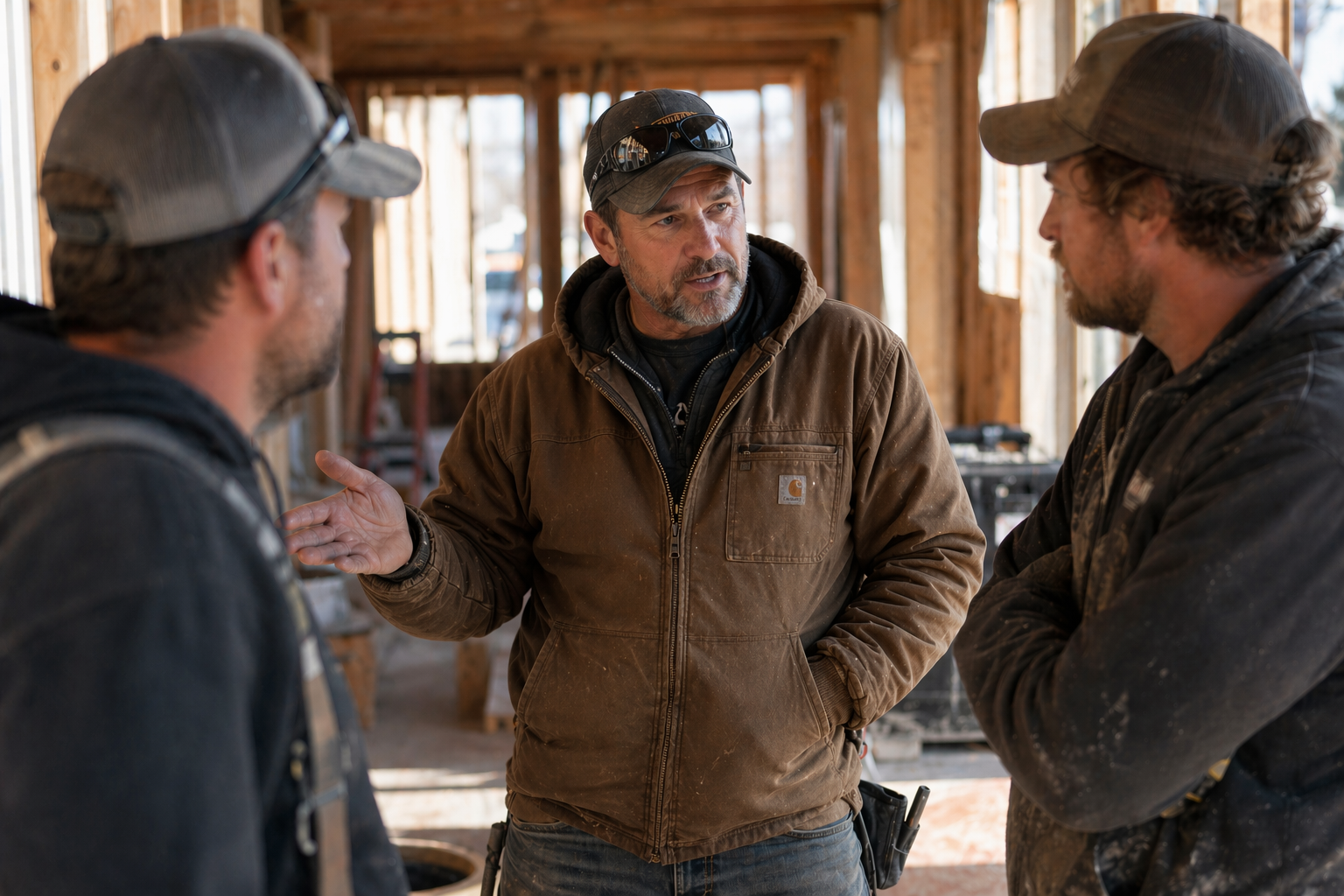
When you’re running a hands-on business, you aren't just managing projects; you’re managing people. Every day, you’re dealing with a mix of different personalities, work habits, and attitudes all on the same jobsite. Sooner or later, something is bound to clash, and you’ll find yourself needing to step in. We see this happen all the time.
Those tough conversations you’d rather avoid are usually the ones that actually move the needle. That’s because workplace culture for small businesses isn’t something you create with a handbook or a meeting. You build it in those real, messy moments when things go sideways, and you have to decide how to handle the situation.
Why avoiding difficult conversations at work creates bigger problems
It’s easy to let small issues slide. Maybe someone is showing up late, cutting corners, or bringing a bad attitude. You tell yourself you’ll deal with it later.
But later usually means worse.
Research from Crucial Learning reveals that unresolved workplace issues and avoided conversations can cost organizations thousands in lost productivity while damaging morale and relationships. Small issues that go unchecked will eventually grow and start affecting the entire team. And the longer they go unaddressed, the harder they become to fix.
What strong leadership communication skills look like on the job
Being a strong leader isn't about being hard-nosed; it’s about being clear and consistent with your expectations. In our experience, leadership communication skills usually boil down to two things: timing and tone. If you catch an issue early, keep the conversation simple, and focus on the solution rather than the blame, things go much smoother.
A Gallup report shows that highly engaged teams are more productive and significantly less likely to leave, highlighting the impact of strong leadership and consistent communication. When people sense a clear direction, everyone stays on the same page.
How to handle tough conversations with employees without losing respect
You don't need a formal script to get it right. You just need to be willing to speak up when it matters. The key is being direct without making it personal. Focus on the work and expectations.
Keep it private: Talk one-on-one, not in front of others.
Be specific: Clearly explain what needs to change.
Stay calm: Keep emotion out of the conversation.
Set expectations: Make the next steps clear.
Follow up: Reinforce accountability after the conversation.
Building a strong team culture starts with what you address
Every team is watching to see what gets ignored. When you let problems slide, the standards for everyone start to drop. But when you actually address things, it sends a clear signal about what you expect.
Here are the most important workplace issues that deserve immediate attention:
Consistent lateness: Signals a lack of accountability
Cutting corners: Leads to bigger problems later
Negative attitudes: Spreads quickly across the team
Safety shortcuts: Puts everyone at risk
Poor communication: Causes confusion and mistakes
Lack of effort: Drags down overall performance
The standard you set is the culture you get
We’ve seen it time and time again — the conversations you step into shape your team. When you address issues early and consistently, you set the standard for how everyone shows up and performs. In the long run, it’s those honest, straightforward moments that build respect, accountability, and a stronger workplace culture.

